Drop a few threads of saffron into warm milk and, at first, nothing happens. Dark red thread, white milk, a faint sense of having made a mistake. Then the gold begins: a thin amber line at the edge of each thread, widening slowly until the whole cup has changed.
That small piece of patience is most of what saffron is. And it takes a great deal of work to arrive at it.
Three jobs, one thread
As flavour, saffron is something Indian kitchens finish with rather than cook with. A few threads go into the kheer, the biryani, the mithai, a glass of warm milk. It is used by the strand, never the spoonful, and so it is remembered for its aroma more than its quantity.
As colour, it has an older résumé than the spice rack suggests. Saffron's pigment gives a rich golden-yellow to dishes and textiles, and it has been used to colour cloth, particularly in China and India.
And as beauty, it has a long place in traditional practice. Ancient perfumers also used saffron in ointments and perfumes.
What's actually in it
Three compounds do the work. Crocin is the pigment, and because it dissolves in water, a few threads can colour a whole pot. Picrocrocin is the bitter note beneath the sweetness. As the threads dry, picrocrocin breaks down into safranal, the main source of the aroma, often described as hay-like and honeyed.
The work is where the price comes from. About 150,000 flowers, picked by hand in a few autumn weeks around places like Pampore in Kashmir, make a single kilogram of saffron, and each flower yields only three threads. In 2020, Kashmir saffron received a Geographical Indication (GI) tag, which ties the name to the region.
Where Tattvam fits in
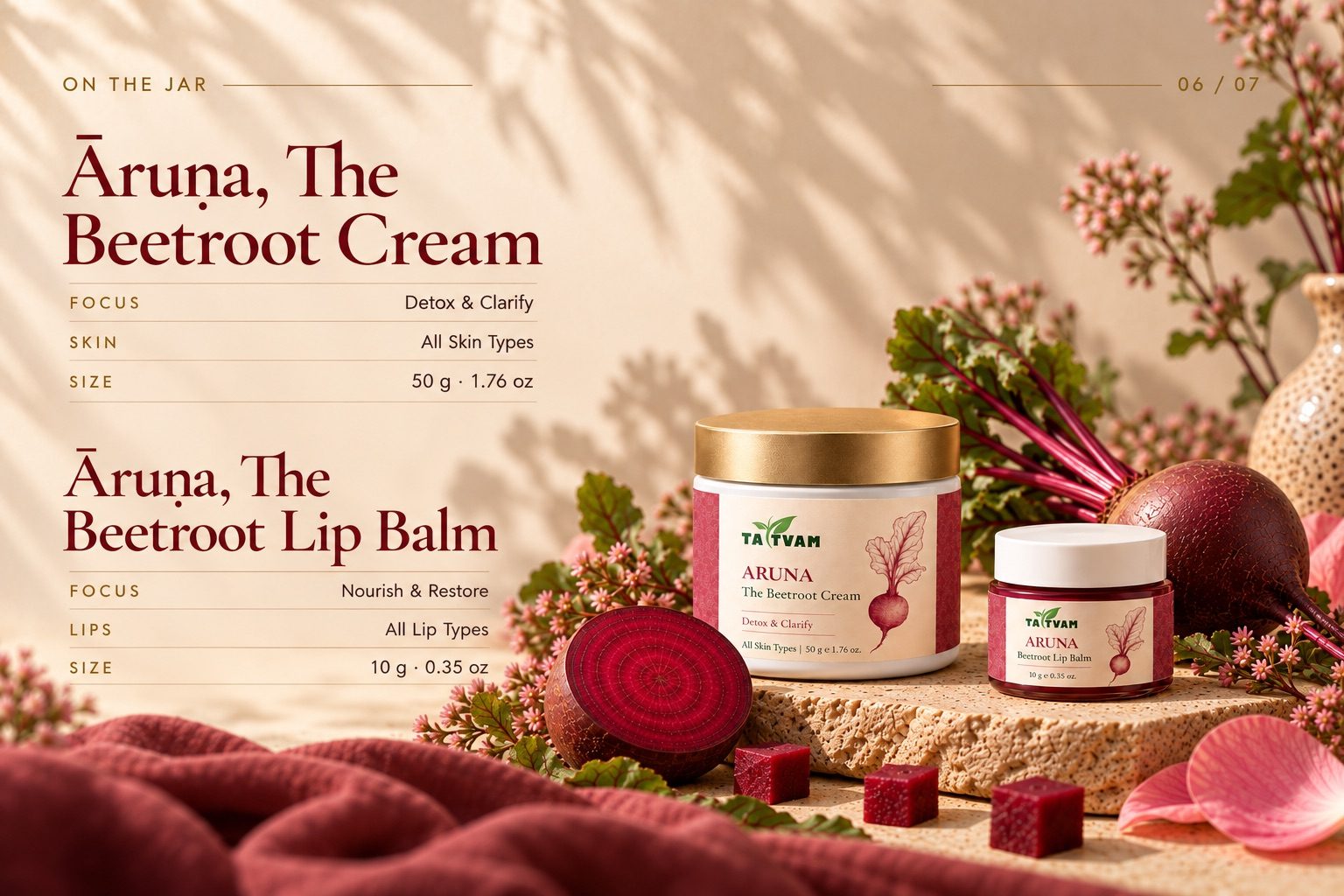
We reach for saffron in skincare. Smṛti, our saffron cream and lip balm, takes its name from the Sanskrit word for memory. It is inspired by the ayurveda and made with hand-harvested kesar and Ayurvedic botanicals. Its tagline is Where radiance remembers.
Saffron has never needed to be plentiful to be remembered. It asks for a few threads, a little warmth and some patience, and leaves colour behind.